Sleep and Recovery: Optimizing Youth Athlete Sleep
At Mercer Island FC, we pride ourselves on our work on the pitch. We drill possession. We practice transitions. We improve fitness. But we also strive to develop our players as people.
All the hard work our players put in on the pitch is potentially being sabotaged by something they are not doing. Today we talk about the most powerful recovery tool available—a free, legal performance enhancer that guarantees you faster sprints, better decision-making, and significantly fewer injuries.
That tool is Sleep. Sleep is part of your training. If you are not sleeping, you are not recovering. If you are not recovering, you are not improving.
Cognitive Fatigue: The Silent Enemy on the Ball
You might feel physically capable after a five-hour night, but your brain is already lagging. In youth soccer, reaction time is everything.
- Decision Speed: Tired brains struggle with spatial awareness.
- Tactical Execution: Players operating with high cognitive fatigue (from school or late gaming) make poor execution decisions when under pressure.
- Emotional Regulation: Players who lack REM sleep are more reactive and lose focus faster after a bad call.
Physical Fatigue: What Happens While You Sleep
Your body doesn't build muscle while you drill; it builds muscle while you rest. The most powerful physical recovery happens in the specific deep sleep stages that you lose first when you cut sleep short.
This diagram shows that the crucial physical repair stage happens earliest in the night, while mental consolidation happens later.
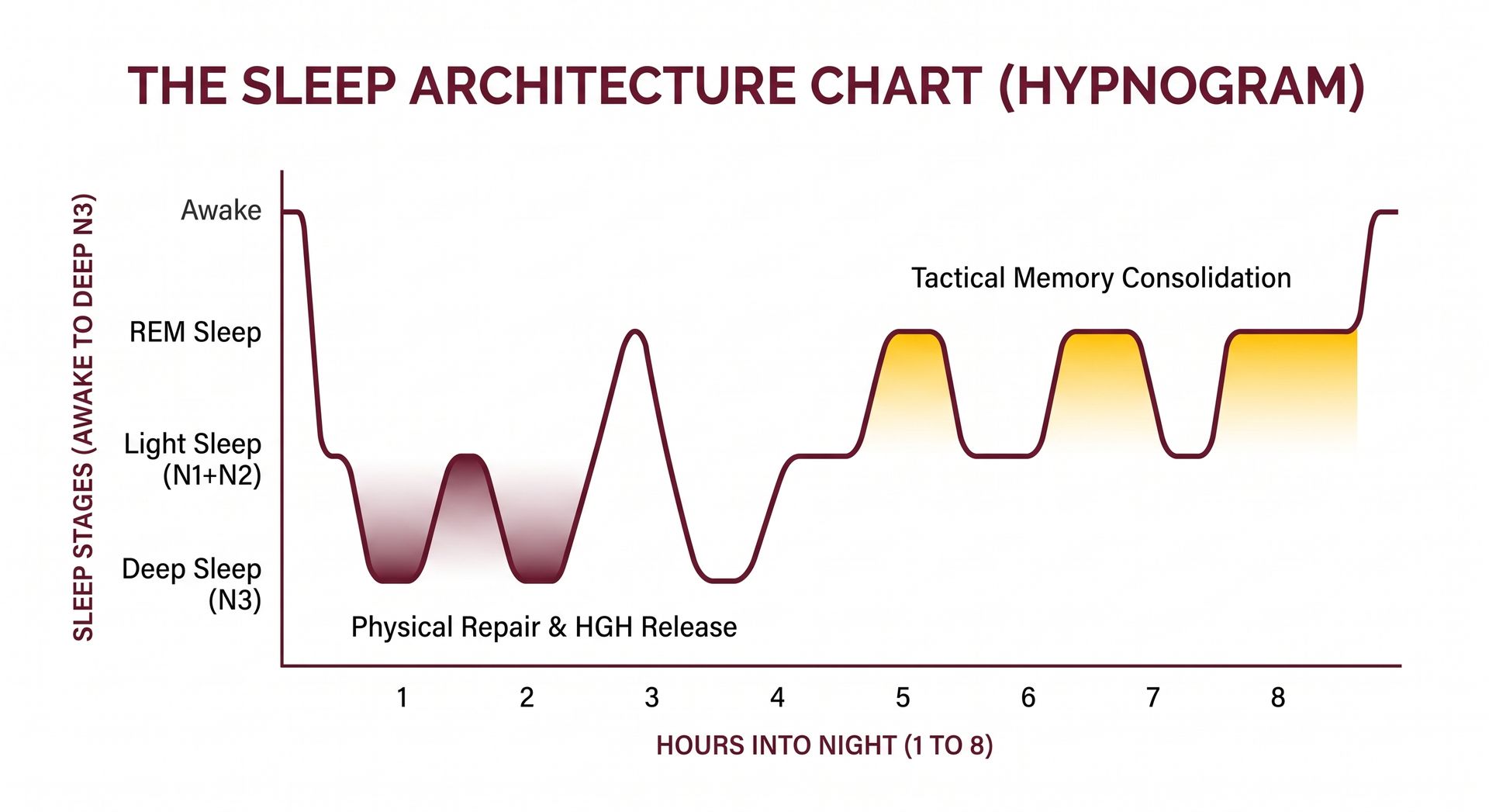
During Deep Sleep (Slow-Wave Sleep), your body launches its construction crew. This is the physiological window when your body repairs and strengthens micro-tears in muscle tissue created during a high-intensity session. Crucially, this is also when your body releases Human Growth Hormone (HGH). Chronic lack of deep sleep stalls this growth and repair process.
If Deep Sleep rebuilds your body, REM Sleep (the final cycles of the night) consolidates your memory. All those technical skill progressions and tactical memory sequences you learned at practice are consolidated in your brain specifically during REM sleep.
The Sleep and Injury Relationship
We dedicate hours to dynamic warm-ups and load management, yet the greatest injury risk factor sits right in our bedrooms.
- Recent sports science reviews show that adolescent athletes chronically sleeping under 8 hours face significantly higher injury rates.
- When sleep-deprived, reaction times slow and fatigue masks poor landing mechanics, leading directly to non-contact strains, ligament tears, and bone stress injuries.
- For adolescent players undergoing growth spurts, poor sleep amplifies baseline vulnerability, accelerating injury risk up to fivefold in heavy-training weeks.
Maturation, The Menstrual Cycle & Recovery
For our developing female athletes entering puberty, natural hormone variations across the monthly cycle can subtly influence sleep:
- Slight changes in body temperature and natural hormone shifts can cause mild restlessness or make it take slightly longer to drift off.
- Some athletes notice an increased need for restful downtime or deeper sleep during their period to offset physical fatigue and muscle soreness.
- Takeaway: Listen to your body. If you feel more fatigued during certain weeks, adjust your bedtime 20–30 minutes earlier and focus on hydration and nutrition.
Player Sleep Hygiene Checklist
- Aim for Your Target: Players aged 6–12 need 9–12 hours; athletes aged 12–16 need 8–10 hours each night.
- Screen Curfew: Shut off smartphones, consoles, and tablets 30–60 minutes before bed; blue light mimics daytime sun and suppresses your natural sleep hormones.
- Room Temperature: Keep your room cool (between 65°F and 68°F / ~18°C) to encourage deep slow-wave sleep.
- Consistent Wake Times: Keeping sleep schedules within 60 minutes on weekends protects your weekly rhythm.
Download the Mercer Island sleep log; keep it next to your bed and record your sleep
How Parents Can Help a Player’s Sleep: Actionable Guidelines
Parents control the home environment, evening schedules, and dinner routines—making them the most critical drivers of an athlete’s recovery.
1. Optimize the Sleep Environment ("The Bedroom Cave")
- Drop the Bedroom Temperature: Keep the room cool, around 17°C–20°C (65°F–68°F). A cooler bedroom lowers the athlete's core body temperature, which is biologically required to transition into deep, restorative slow-wave sleep.
- Block Out Ambient Light: Use blackout curtains, shades, or an eye mask. Even minor ambient light signals the brain to remain alert.
- Switch to Low/Warm Lighting at Night: Turn off harsh overhead LED or fluorescent lights after dinner. Switch to floor lamps, warm bulbs, or dim red nightlights for evening routines and bathroom trips so melatonin production isn't interrupted.
- Keep the Bed for Sleeping Only: Keep video consoles, homework desks, and snacking out of the bed. This trains the brain to associate being under the covers strictly with sleep.
2. Digital Curfews & Evening Routine
- Institute a Screen Cut-Off (60 Minutes Pre-Bed): Blue light emitted from smartphones, iPads, and gaming consoles acts as "false sunlight," delaying natural melatonin release and deep sleep.
- Set Up an Overnight "Device Charging Station": Charge all phones, tablets, and gaming gear overnight in a central living area (kitchen or hallway) rather than in the player's bedroom.
- Wind-Down Transitions: Encourage screen-free decompression during the final hour before bed—reading a physical book, light foam rolling/stretching, or listening to calm music.
3. Nutrition & Digestion Timing
- Afternoon Caffeine Curfew: Avoid sodas, energy drinks, tea, and caffeinated pre-workouts after 12:00 PM–2:00 PM. Caffeine has a 5- to 6-hour half-life; even if a child falls asleep easily, caffeine in the system suppresses slow-wave deep sleep.
- Post-Training Snacks: Avoid high-glycemic sugar spikes (sugary cereals, treats) right before bed, which cause overnight blood sugar crashes and mid-sleep waking. If an athlete trains late and needs calories, provide a light snack combining protein with complex carbs (e.g., Greek yogurt with honey, milk, or oatcakes) 60 minutes before bed.
- Buffer Hard Workouts: High-intensity training elevates core body temperature and sympathetic nervous system activity. Ensure a cool-down buffer of at least 1.5 to 2 hours between finishing intense play and lights-out.
4. Circadian Rhythm Anchors
- Protect Consistent Wake Times (Even on Weekends): Keep wake times within 60 minutes across all 7 days. Letting athletes stay up late and sleep in until noon on weekends creates "social jet lag," which impairs neuromuscular readiness and mood when the school and training week resumes.
- Get Morning Sunlight (Within 30–60 Minutes): Have players get 5–10 minutes of natural outdoor daylight shortly after waking up. Natural morning light stimulates daytime alertness hormones (cortisol) and sets the biological countdown for evening melatonin release.
- Hit Age Sleep Duration Targets: Ensure scheduled bedtimes realistically accommodate the required sleep targets: 9–12 hours for ages 6–12, and 8–10 hours for ages 12–16.
5. Watch for Signs of Under-Recovery
Because chronic sleep deprivation in youth athletes increases injury risk (amplified up to fivefold in heavy training phases), parents should monitor for behavioral and physical warning signs:
Getting sick or catching colds frequently
Uncharacteristic mood swings, irritability, or low emotional resilience
Intense cravings for high-sugar junk foods
Falling asleep instantly in the car on short drives or struggling to wake up in the morning
Clumsiness, slow reaction times, or repeated minor muscle tweaks
Download the Mercer Island FC Parents Sleep Guide to help your child maintain good sleep hygiene
Any parents wishing to reach out on this topic or any others, please feel free to contact me at ryan.bowen@mifc.org