
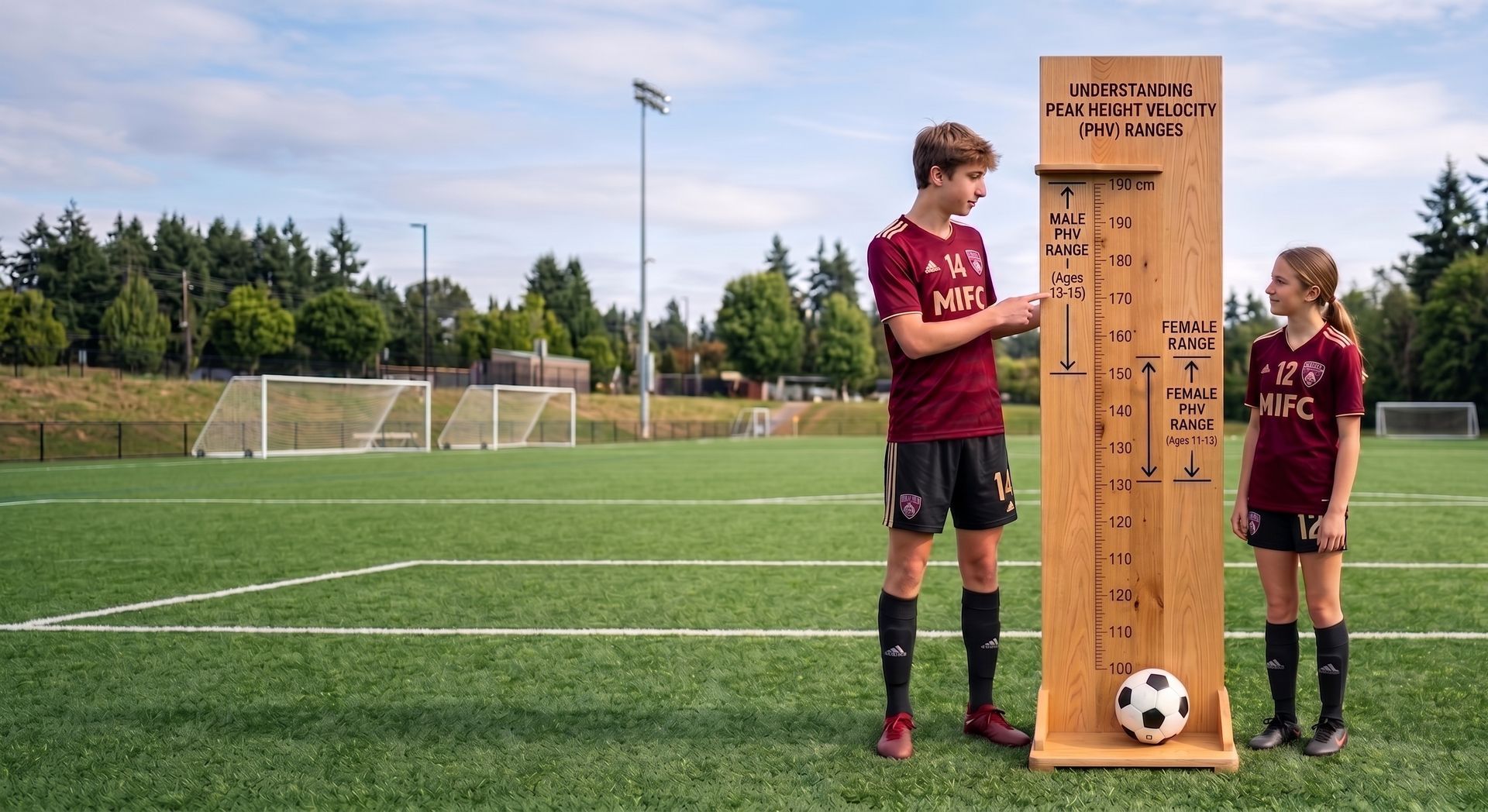
Have you ever watched your highly coordinated, technically gifted child suddenly look like they have forgotten how to run or dribble? One week they are gliding past defenders, and the next, they are tripping over the ball and struggling with basic agility. As a parent, this can be incredibly confusing and even a little frustrating. You might wonder if they have lost focus, if their cleats are the wrong size, or if they are losing interest in soccer. Before you replace their gear or have a stern talk about effort, there is a scientific concept you need to know: Peak Height Velocity (PHV) What is Peak Height Velocity? Peak Height Velocity, or PHV, is the period during adolescence when an athlete experiences their fastest upward growth. It is the core scientific marker of the classic "growth spurt." During this window, athletes don't just grow; their biological structure is rapidly shifting. Understanding when this is happening is one of the most critical aspects of youth sports science, as it impacts everything from performance on the field to injury risk off it. The Science of "Adolescent Awkwardness" The sudden clumsiness you see on the field is a very real physiological phenomenon. Here is exactly what is happening under the surface: Bones Grow First: During PHV, a player's bones grow at an accelerated rate. Muscles and Tendons Lag Behind: The muscles and tendons do not grow at the same speed. They are forced to stretch tightly across these newly lengthened bones. The Brain is Playing Catch-Up: Because the limbs are suddenly longer and the center of gravity has shifted, the brain's internal map of the body is suddenly outdated. Motor control, coordination, and spatial awareness temporarily decline while the nervous system recalibrates to this "new" body. Reading the Growth Curve Correctly To track this phase, sports scientists look at growth velocity. When you look at a standard growth tracking visual, the curve charts the rate of growth against a player's age. It is a common misconception to expect the massive spike in growth to happen later as they mature. In reality, the visual curve peaks right in the middle of these critical youth and early adolescent years. The curve shoots upward as they hit maximum growth velocity, and then slopes downward as they get older and approach their mature adult height. Recognizing that this peak happens exactly when they are in the thick of their youth soccer development is crucial for setting the right expectations.
More in soccer club news
Have you ever watched your highly coordinated, technically gifted child suddenly look like they have forgotten how to run or dribble? One week they are gliding past defenders, and the next, they are tripping over the ball and struggling with basic agility. As a parent, this can be incredibly confusing and even a little frustrating. You might wonder if they have lost focus, if their cleats are the wrong size, or if they are losing interest in soccer. Before you replace their gear or have a stern talk about effort, there is a scientific concept you need to know: Peak Height Velocity (PHV) What is Peak Height Velocity? Peak Height Velocity, or PHV, is the period during adolescence when an athlete experiences their fastest upward growth. It is the core scientific marker of the classic "growth spurt." During this window, athletes don't just grow; their biological structure is rapidly shifting. Understanding when this is happening is one of the most critical aspects of youth sports science, as it impacts everything from performance on the field to injury risk off it. The Science of "Adolescent Awkwardness" The sudden clumsiness you see on the field is a very real physiological phenomenon. Here is exactly what is happening under the surface: Bones Grow First: During PHV, a player's bones grow at an accelerated rate. Muscles and Tendons Lag Behind: The muscles and tendons do not grow at the same speed. They are forced to stretch tightly across these newly lengthened bones. The Brain is Playing Catch-Up: Because the limbs are suddenly longer and the center of gravity has shifted, the brain's internal map of the body is suddenly outdated. Motor control, coordination, and spatial awareness temporarily decline while the nervous system recalibrates to this "new" body. Reading the Growth Curve Correctly To track this phase, sports scientists look at growth velocity. When you look at a standard growth tracking visual, the curve charts the rate of growth against a player's age. It is a common misconception to expect the massive spike in growth to happen later as they mature. In reality, the visual curve peaks right in the middle of these critical youth and early adolescent years. The curve shoots upward as they hit maximum growth velocity, and then slopes downward as they get older and approach their mature adult height. Recognizing that this peak happens exactly when they are in the thick of their youth soccer development is crucial for setting the right expectations.

Learn how to choose safe soccer cleats for artificial turf to protect young players. Get expert recommendations for youth soccer today!

MIFC & EFC West Welcome Experienced Coach & Director, Erin Vaughan

MIFC & Eastside FC Enter a New Partnership for the 2026/27 Season & Beyond

MIFC Announces the Alex Quinlan Memorial Scholarship

MIFC Hires its First Ever Director of Soccer and Community

MIFC 60th Anniversary

MIFC Annual AGM